Peat and Sustainability — The Cosmetic Context
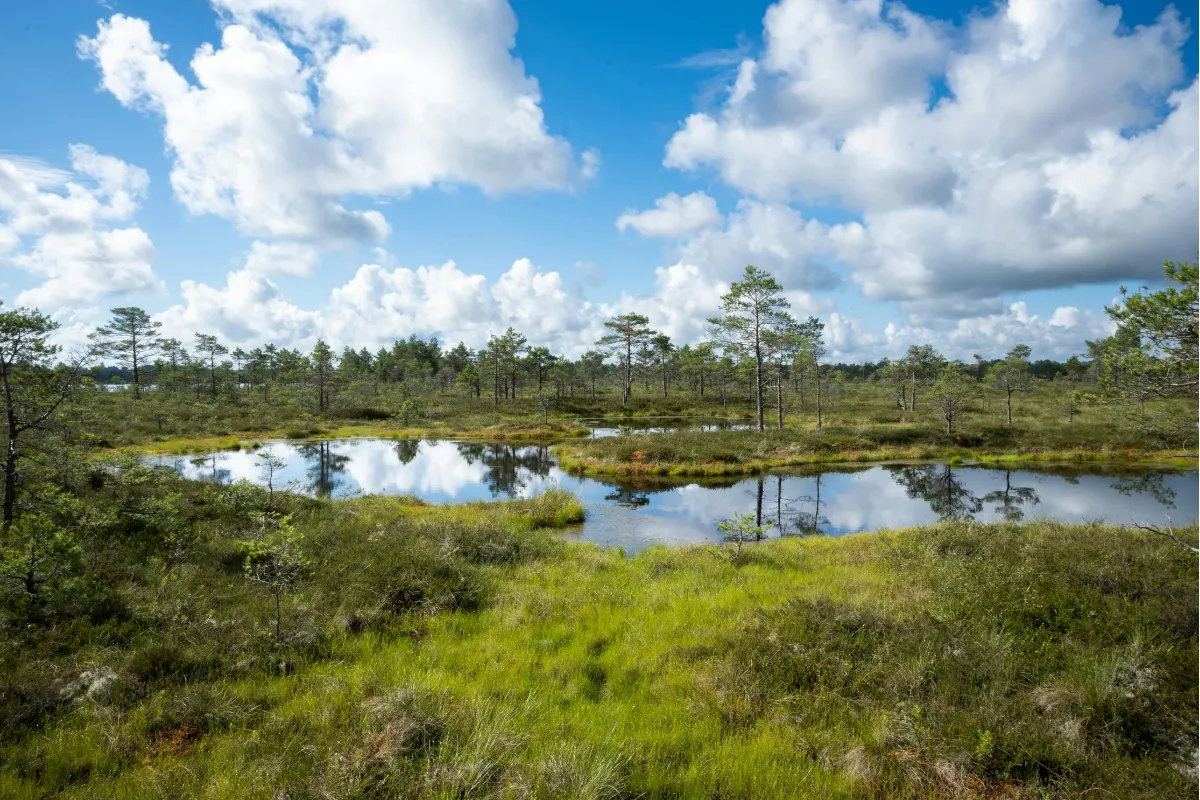
The Elephant in the Bog
Peat is a contentious material. Environmental organizations rightly highlight the importance of peatlands as carbon stores and biodiversity habitats. Any institution working with peat must address sustainability head-on.
Peatlands Matter
Peatlands cover only 3% of the Earth’s land surface but store approximately 30% of all soil carbon — more than all the world’s forests combined. When peatlands are drained or burned, this stored carbon is released as CO₂. Peatland destruction is a significant contributor to climate change.
The primary threats to peatlands are:
- Agricultural drainage — Converting peatlands to farmland (by far the largest driver)
- Energy peat extraction — Industrial-scale harvesting for power generation (mainly Finland, Ireland, Russia)
- Forestry drainage — Draining peatlands for timber production
- Urban development — Building on drained peatlands
Cosmetic Peat Is Not Energy Peat
The scale difference between cosmetic/therapeutic peat use and industrial peat extraction is enormous:
- Energy peat — Millions of tonnes per year. Entire bogs stripped to bedrock. Irreversible destruction.
- Cosmetic peat — Tonnes per year. Small volumes extracted from specific layers. Minimal landscape impact.
A single peat-fired power station consumes more peat in one day than the entire global cosmetic peat industry uses in a year. The environmental footprint of cosmetic peat is negligible compared to energy or horticultural use.
How Responsible Extraction Works
Best practices for cosmetic peat extraction (as established by Estonian and Finnish research):
- Selective layer harvesting — Only the therapeutically suitable middle layer (H6–H8) is extracted, not the entire deposit
- Below water table — Suitable peat layers must be below the bog water table, ensuring the bog’s hydrology is not disrupted
- Natural condition sites — Only bogs in natural (undrained) condition are used
- Small volumes — Cosmetic extraction removes tiny volumes relative to deposit size
- Ecological monitoring — Trace element and microbiological testing ensures both product safety and environmental baseline
The Restoration Argument
Paradoxically, the cosmetic peat industry may benefit peatland conservation:
- Economic value for intact bogs — If bogs have value as sources of cosmetic peat (which requires natural, undrained conditions), landowners have an economic incentive to keep bogs intact rather than draining them for agriculture or forestry
- Small footprint, high value — Cosmetic peat is a high-value, low-volume product. The economic return per tonne is orders of magnitude higher than energy peat, meaning far less extraction is needed
- Research funding — Commercial interest in cosmetic peat drives scientific research into peat chemistry and biology, which also benefits conservation science
The Honest Answer
Cosmetic peat use is not an environmental threat. But the cosmetic peat industry exists within a broader context where peatlands are under serious pressure. The institute should be transparent about this context, advocate for responsible practices, and position cosmetic peat as a reason to protect bogs — not destroy them.